“With good friends…and good food on the board…we may well ask, When shall we live if not now?”
— M.F.K. Fisher, The Art of Eating
Imagine taking a bite of your favourite food — a gorgeous slice of pizza, a perfectly ripe mango, or a comforting bowl of pilau. That first taste sparks something deeper than just flavour. It evokes comfort, pleasure, memory, and sometimes even connection.
But where does this joy come from? Is it simply your taste buds at work, or is there something more? Often, it is the memories a certain food holds, the comfort it provides, or the way it connects us to ourselves and the people around us.
The joy of eating goes far beyond satisfying hunger. Food engages our senses, influences our emotions, and shapes our relationship with ourselves and others.
The Sensory Joy of Eating
When we think about eating, we often think first about taste. But food actually engages all five senses.
Think about a fresh loaf of sourdough bread:
- The aroma wafting from the oven (smell)
- The golden-brown crust and rustic shape (sight)
- The warmth and texture of the crust and soft dough (touch)
- The satisfying crunch as you bite into it (sound)
- And finally, the rich, slightly tangy flavour with the contrast between crisp crust and soft interior (taste)
When we eat mindfully — slowing down, savouring each bite, and paying attention to our senses — we deepen our appreciation for food. Yet many of us rush through meals while distracted, barely registering what we are eating.
A gentle reminder to slow down at mealtimes can completely change the experience. Food becomes not just fuel, but also a source of nourishment, comfort, and delight.
The Science of Food and Happiness
Food fuels our bodies, but it also affects our mood, energy, and overall well-being.
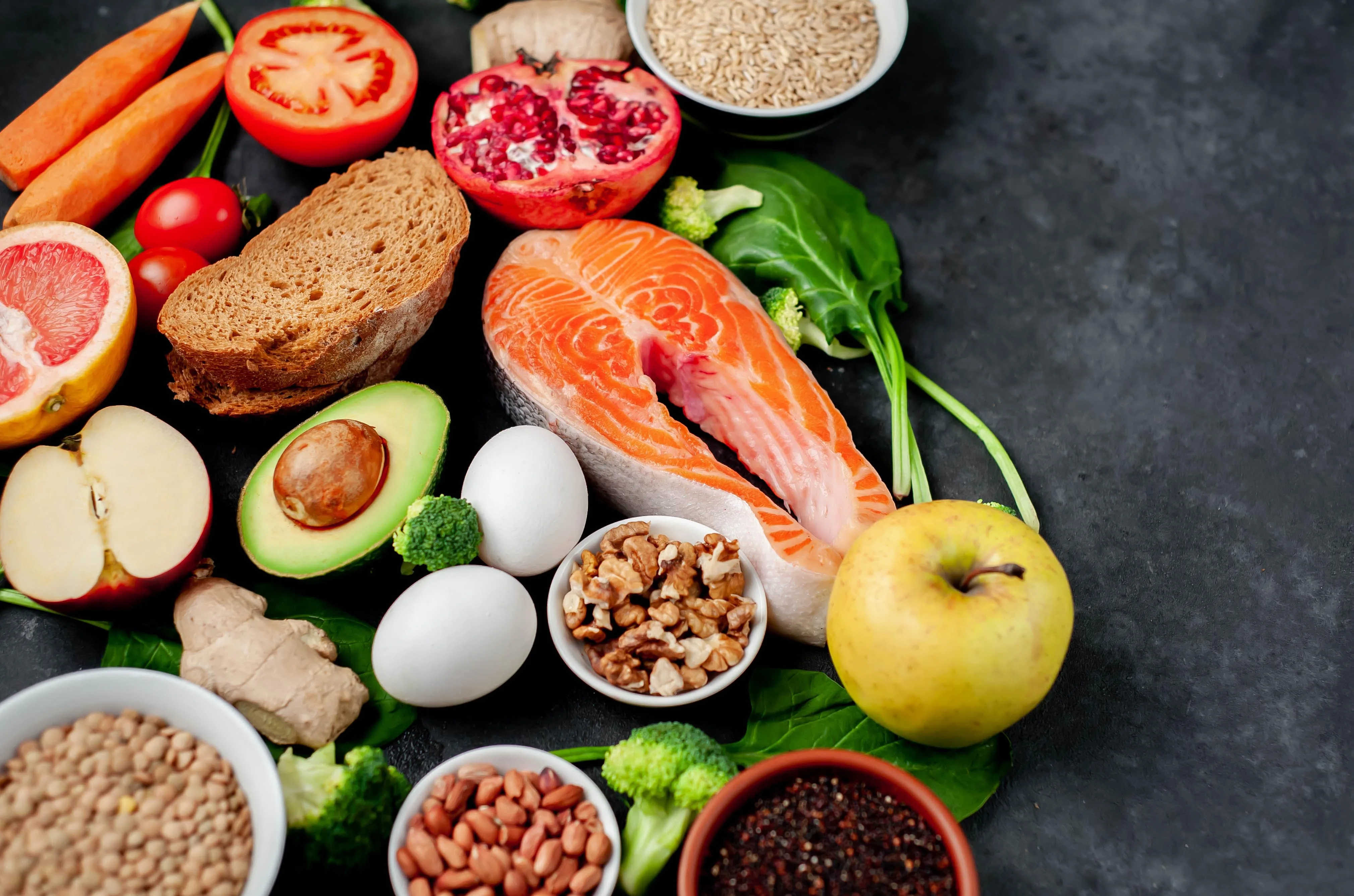
One concept receiving increasing attention is the gut-brain connection, also known as the gut-brain axis. Research suggests that a healthy gut microbiome may positively influence mood and cognitive function, while an imbalanced gut may contribute to feelings of anxiety and low mood. Fibre-rich foods help nourish the gut microbiome. Salmon, walnuts and flaxseeds contains omega-3 fatty acids, linked to supporting brain health and mood.
Beyond mood, food choices also influence energy levels. Highly processed foods and refined sugars may lead to energy crashes, while whole, nutrient-dense foods tend to support more stable energy and focus throughout the day.
Food as Connection
Food is more than sustenance — it is often a bridge to connection. Meals bring people together, strengthen relationships, and create shared experiences. Think about birthdays, family dinners, catching up with friends, or going on a date. So many meaningful moments in life happen around a table.
Even certain smells or flavours can instantly transport us back to a memory — a childhood meal, a holiday, or a loved one’s kitchen. Food has a remarkable ability to connect emotion, memory, and belonging.
Sharing meals can help foster feelings of comfort, and community in a world that often feels rushed and disconnected.
Reclaiming the joy of eating
For years, diet culture encouraged restrictive and guilt-driven relationships with food, turning eating into something to control rather than something to enjoy. The pressure to eat “perfectly” can take away the simple pleasure of nourishing ourselves.
Fortunately, the conversation is shifting.
Approaches such as intuitive eating encourage people to reconnect with their body’s natural hunger and fullness cues, while building a more balanced and compassionate relationship with food. Rather than focusing only on restriction, there is growing recognition that enjoyment, satisfaction, nourishment, and health can exist together.
Food should not only be about nutrients and numbers. It should also bring pleasure, culture, comfort, and connection.
So the next time you prepare, order, or sit down to enjoy a meal, take a moment to slow down. Engage your senses, savour the experience, and allow yourself to reconnect with one of life’s simplest joys: eating well and eating with presence.