Antibiotics have saved lives. But when they end up in your food, they may be quietly sabotaging your health. At Too Good, we’re committed to keeping antibiotics out of our milk, yogurt, and all our products. This isn’t just a marketing claim—it’s a sci...
1 min Read|by huadmin
Antibiotics have saved lives. But when they end up in your food, they may be quietly sabotaging your health. At Too Good, we’re committed to keeping antibiotics out of our milk, yogurt, and all our products. This isn’t just a marketing claim—it’s a science-backed, gut-driven, health-first philosophy. Why? Because the very thing that once revolutionized modern medicine has now become a hidden threat when misused in agriculture and food systems. Let’s break it down. Hidden Antibiotics in Your Food Antibiotics are commonly used in livestock—not just to treat illness but also to promote growth and prevent disease in crowded, industrial farming conditions. While this may sound efficient, it leaves behind residues that can end up in the milk, meat, or dairy you consume daily. Studies show that antibiotic residues are often found in animal-based food products, particularly when withdrawal periods (the time between drug administration and when the animal’s product is deemed safe for consumption) are not properly observed (Okocha et al., 2018). The Health Consequences These aren’t just tiny traces to ignore. Over time, even low-dose exposure to antibiotics through food can significantly impact your health.
  1. Gut Health Disruption
Antibiotics don’t just kill the bad guys—they wipe out beneficial gut bacteria too. Your gut microbiome plays a key role in digestion, mental health, and even hormone regulation. When it's out of balance, you may experience bloating, irregular bowel movements, and weakened nutrient absorption (Francino, 2016). 2. Weakened Immunity Over 70% of your immune system lives in your gut. When antibiotics disrupt your microbiota, they also dampen your body’s immune defenses (Belkaid & Hand, 2014). This leaves you more vulnerable to infections, allergies, and inflammatory conditions. 3. Antibiotic Resistance This is the most alarming consequence. Repeated, low-level exposure to antibiotics—like the kind you unknowingly consume in your food—can cause bacteria in your body to evolve into superbugs. These resistant strains render real antibiotics ineffective when you genuinely need them (World Health Organization, 2022). In simple terms: one day, you might face a serious infection—and the antibiotics your doctor prescribes may not work. Food Integrity at Stake This isn’t just a medical issue—it’s a food integrity issue. Consumers today are unknowingly exposed to additives, chemicals, and residues that were never part of traditional farming or food-making. At Too Good, we believe your right to safe, clean, and nourishing food is non-negotiable. That’s why we follow a strict no-antibiotics policy in all our dairy sourcing. Our Promise: Antibiotic-Free Always We make bold choices so you don’t have to second-guess your food.
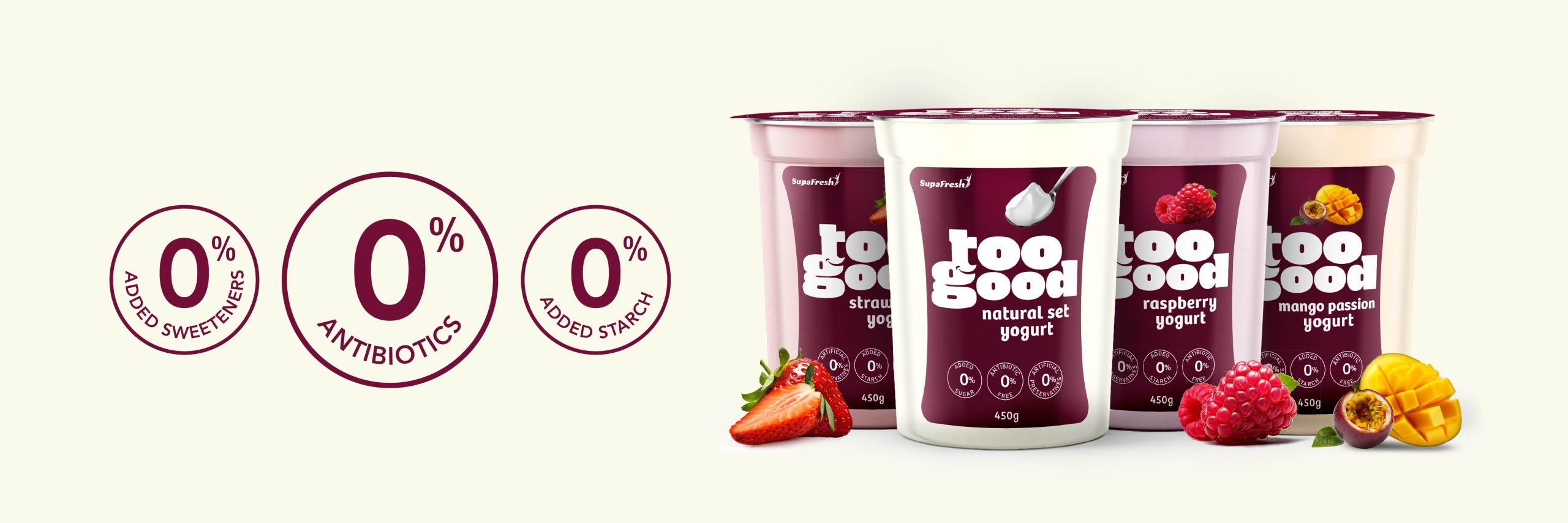
  • No antibiotics in our milk.
  • No antibiotics in our yogurt.
  • No shortcuts—just honest, nourishing food.
By sourcing from trusted farms and working directly with producers who share our values, we’ve created a supply chain that prioritizes health over haste, and ethics over shortcuts. Too Good: Where Health Meets Integrity We’re not just another dairy brand—we’re a clean-label revolution for people who want better. Our promise to you isn’t rooted in marketing buzzwords. It’s anchored in science, transparency, and trust. If you care about what goes into your food, it’s time to choose brands that care too. You can now find Too Good at Healthy U stores across the country. Say no to silent saboteurs. Say yes to food that’s Too Good. References
  1. 1. Okocha, R. C., et al. (2018). Food safety impacts of antimicrobial use and residues in livestock and aquaculture.Journal of Infection and Public Health, 11(1), 6–11. DOI: 10.1016/j.jiph.2018.02.002
  2.  Francino, M. P. (2016). Antibiotics and the Human Gut Microbiome: Dysbioses and Accumulation of Resistances.Frontiers in Microbiology, 6, 1543. DOI: 10.3389/fmicb.2015.01543
  3. Belkaid, Y., & Hand, T. W. (2014). Role of the microbiota in immunity and inflammation. Cell, 157(1), 121–141. DOI: 10.1016/j.cell.2014.03.011
  4. World Health Organization. (2022). Antibiotic Resistance Factsheet. WHO Website