Continuous glucose monitors (CGMs) have become one of the biggest wellness trends of the moment. You’ve probably seen the graphs on social media: colourful spikes and dips claiming to show how “good” or “bad” different foods are for your blood sugar. B...
1 min Read|by huadmin
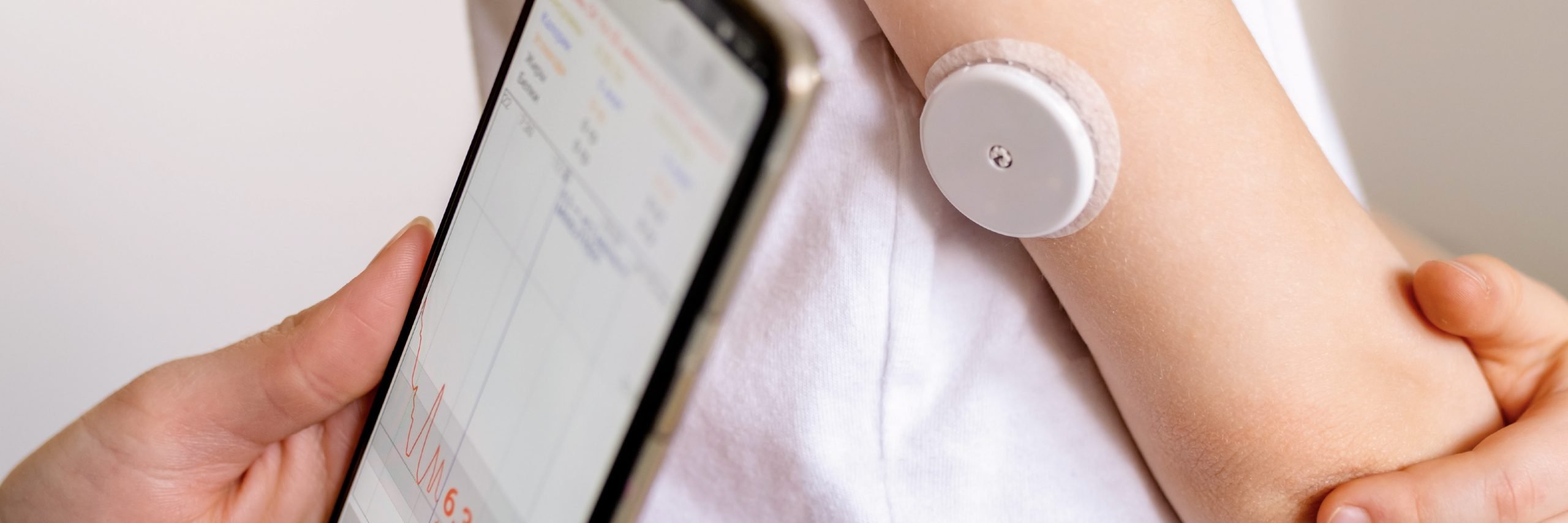
Continuous glucose monitors (CGMs) have become one of the biggest wellness trends of the moment. You’ve probably seen the graphs on social media: colourful spikes and dips claiming to show how “good” or “bad” different foods are for your blood sugar. But what do these devices actually measure? And more importantly — what can they not tell us? Let’s break it down simply and clearly. What does a CGM actually measure? A CGM is a small wearable device that tracks glucose levels day and night. Instead of measuring glucose in your blood, like a finger-prick test does, it measures glucose in interstitial fluid — the fluid that surrounds your cells. A tiny sensor sits just under the skin (usually on your arm or tummy) and takes readings every few minutes. Because the sensor isn’t in a blood vessel, there are two natural differences:
  1. There is a time lag — glucose appears in interstitial fluid a little later than in the bloodstream.
  2. The concentration differs — the two fluids don’t contain exactly the same amount of glucose at the same time.
CGM companies use algorithms to estimate what your actual blood sugar might be, but these algorithms are proprietary. We don’t know exactly how they work, and they don’t always get it right. How a CGM is used (in very simple terms) You insert the sensor under your skin with an applicator, wait 30 minutes to two hours for warm-up, and then glucose readings appear on your phone or receiver. After the sensor expires, you replace it with a new one. That’s the whole process in a nutshell. Why accuracy matters — especially for people without diabetes For people with diabetes, CGMs have been truly life-changing. A CGM gives them real-time information on how your glucose levels are changing. This is especially important because several factors affect blood sugar levels — some of which you can’t predict. They help prevent dangerous highs and lows and make day-to-day management far safer and more convenient. But for people without diabetes, our glucose levels naturally stay within a fairly narrow range. This means that even small inaccuracies in CGM readings can lead to big misunderstandings. Research comparing CGMs with gold-standard finger-prick tests found that: - CGMs tend to overestimate glucose levels on average. - They sometimes misclassify the glycaemic impact of certain foods — suggesting some foods raise glucose more (or less) than they actually do. So a CGM can tell you if your overall diet keeps glucose generally higher or lower throughout the day, but it cannot reliably tell you whether a banana spikes your glucose more than your lunch yesterday. That level of precision simply isn’t there. The problem with those scary spikes you see on social media A lot of fear around normal foods has grown out of CGM graphs that look dramatic — big peaks, sharp drops, alarming colours. These visuals are emotionally powerful, which is exactly why they go viral. But here’s the catch: studies show CGMs can overestimate the time spent in a “high” glucose range by two- to fourfold. That means a graph that looks scary may not reflect anything dangerous at all. To get a reliable picture of how you respond to a food, you'd need to repeat the same test dozens of times — because we vary from person to person and even within ourselves from one day to the next. One dramatic-looking banana graph on Instagram tells you nothing meaningful about your own metabolism. A single number can’t define your health Another nuance often forgotten in the hype: you can “eat to control glucose” and still have an unhealthy diet. For example, you could avoid glucose spikes by choosing meals high in saturated fats — but that would not support heart health or long-term wellbeing. Health has never been about one number. Blood glucose is important, yes — but so are fibre, micronutrients, healthy fats, movement, stress, sleep, and your overall eating pattern. CGMs can’t capture all of that. Why CGMs feel so appealing It’s human nature to want simple answers. In a world full of confusing nutrition messages, having a device tell you “this is good” or “this is bad” feels comforting. The graphs are fun to look at, the data feels empowering, and the whole experience can even be a bit addictive. But relying on a single metric to dictate what you eat isn’t the path to balanced, long-term health. That doesn’t mean they’re useless. For some people, seeing their patterns visually can spark genuine behaviour change. But that change is healthiest when guided by a qualified professional who can help you interpret your data in the bigger context of your overall diet and health, and help you avoid unnecessary food restrictions. So, should you use one? Here’s the bottom line:
  • If you have diabetes: CGMs can be life-changing and medically important.
  • If you don’t have diabetes: CGMs may offer interesting insights into broad patterns, but they’re not accurate enough to judge individual foods — and they can easily create unnecessary stress or confusion.

If you want to have healthy blood sugar levels, a balanced approach is best: focus on fibre, whole foods, movement, quality sleep, steady energy sources, and on how food makes you feel. Those fundamentals matter far more than any one graph. References Katie M Hutchins, James A Betts, Dylan Thompson, Aaron Hengist, Javier T Gonzalez, Continuous glucose monitor overestimates glycemia, with the magnitude of bias varying by postprandial test and individual – a randomized crossover trial, The American Journal of Clinical Nutrition, Volume 121, Issue 5, 2025, Pages 1025-1034, ISSN 0002-9165, https://doi.org/10.1016/j.ajcnut.2025.02.024. https://www.bath.ac.uk/announcements/researchers-warn-continuous-glucose-monitors-can-overestimate-blood-sugar-levels/