
What is GLP-1?
Glucagon-like peptide-1 (GLP-1) is a naturally occurring hormone released after you eat. It signals feelings of fullness to your brain and slows gastric emptying. Essentially, it reduces your appetite and prevents you from overeating.
While GLP-1 receptor agonists such as the branded Ozempic and Mounjaro have helped revolutionise weight management, the downside of rapid weight loss is the potential to lose significant muscle mass, which can lead to diminished strength and a reduced metabolism.
Does GLP-1 cause muscle loss?
Not directly, but the slowed gastric emptying and increased signals of fullness naturally lead to a significant reduction in calorie intake. And when your body is in a large energy deficit, it often breaks down muscle tissue alongside fat to meet its energy demands.
According to the International Society of Sports Nutrition (ISSN), the "aggressiveness" of a deficit matters, and slower weight loss is generally more effective at preserving lean mass.
Because GLP-1 medications can lead to very rapid weight reduction, the risk of muscle loss is significantly higher due to:
- Speed of weight loss: This often triggers the body to use muscle for energy.
- Lower calorie intake: This can make it difficult to consume enough nutrients for muscle repair.
- Reduced appetite: This might lead to a significant drop in total protein consumption.
Why maintaining muscle matters on GLP-1
While weight loss is the primary goal, losing muscle can actually make daily life harder. Maintaining muscle mass is about much more than just how you look; it is essential for how your body functions every day.
Functional strength and mobility
Muscle is what allows you to lift groceries, climb stairs and stay active without constant fatigue. Losing significant muscle can leave you feeling weaker or needing to stop more frequently to rest throughout the day. Consistent training ensures you can stay functionally strong.
Supporting your joints
Your muscles act as shock absorbers for your joints. Maintaining strength in your legs and core protects your knees and back, ensuring your weight loss journey leads to better movement and less pain.
Can you build muscle while on GLP-1?
The short answer is yes, you can absolutely build or at least maintain muscle while using these medications.
While a calorie deficit makes hypertrophy (muscle growth) more challenging, strength training provides the necessary stimulus to keep your muscles active.
Various diets can be effective for improving body composition, provided the focus remains on muscle retention through resistance training.1
- Resistance training provides the mechanical tension needed to signal muscle preservation.
- Lifting weights helps maintain bone density, which is critical during weight loss.
- Consistency is key to ensuring your body prioritises fat loss over muscle loss.
How to prevent muscle loss on GLP-1
Prevention starts with a dual approach: consistent resistance exercise and a robust nutrition plan. You must give your body a reason to keep its muscle, and the raw materials it needs for repair.
- Engage in full-body strength training at least two to three times per week.
- Prioritise high-quality protein at every single meal.
- Monitor your strength levels to ensure you aren't losing power, a key indicator of lean mass retention.
- Ensure you are getting adequate sleep to allow for muscle recovery and hormonal balance.
How much protein do I need on GLP-1?
Protein is the most critical macronutrient when training on GLP-1 medication. Because your overall food volume is lower, the percentage of protein in your diet must increase to compensate.
The ISSN states that while 1.4-2.0g per kg of body weight is enough for most, higher protein intakes approaching 2.3-3.1g per kg of fat-free mass may be required to maximise muscle retention for those on low-calorie diets.1
- Aim for at least 1.4 g of protein per kilogram of your goal body weight as a baseline.
- Spread your protein intake across three to five small meals throughout the day.
- Focus on leucine: This amino acid acts as the "trigger" for muscle building.
- Add in glutamine: This amino acid can support the maintenance of muscle mass during a calorie deficit.
Best protein shake for GLP-1
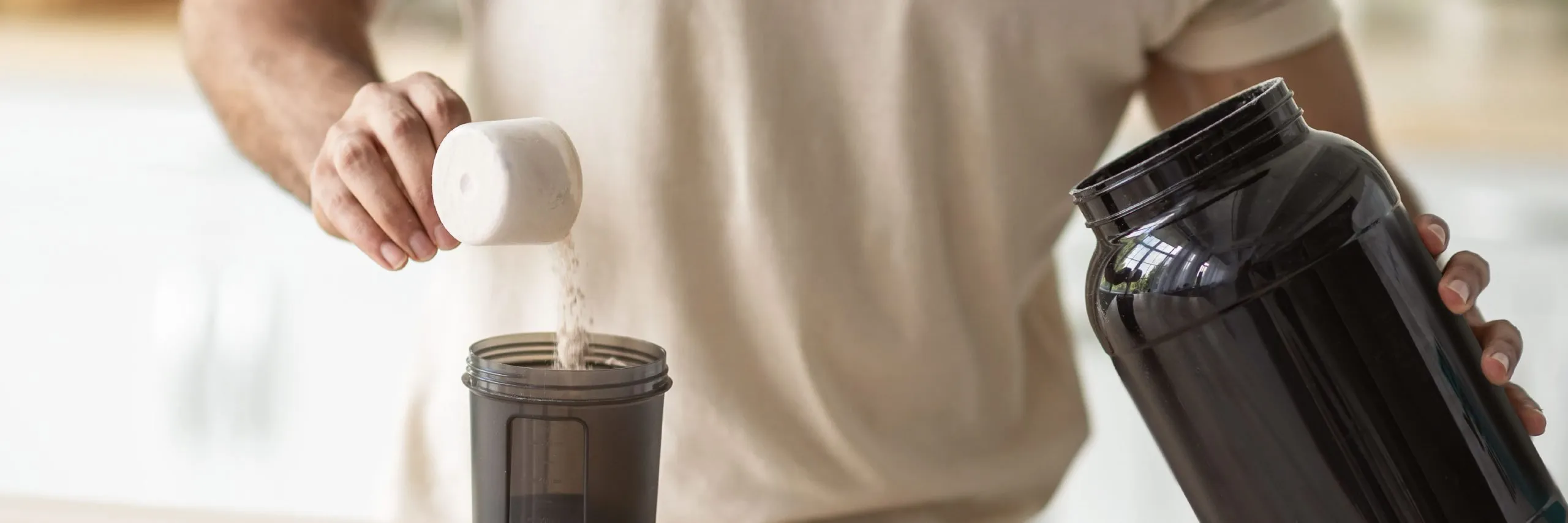
When your appetite is low, a high-quality protein shake is the best protein shake for GLP-1 support. Whey protein is particularly effective because it is rapidly digested and rich in leucine.
- Whey protein isolate is low in lactose and very easy to digest.
- Clear whey is an excellent, light option for those experiencing low appetite.
- Casein protein is a great choice before bed to support muscle repair overnight.
References
- International Society of Sports Nutrition Position Stand: Diets and Body Composition
- Myprotein – Strength Training on GLP-1: Why It’s Essential